
Who Are the "We" We're Becoming? Natural Fine-Tuning @ 60

Updated: May 14

Who are we? What makes us who we are - uniquely, essentially ourselves - over the course of a lifetime? Is it our name? Fingerprints? Bloodlines or DNA? Neural networks? Titles or distinctions? A collection of memories? Significant relationships that bind us to others? Something we might call a mind or a soul? What remains the same over the span of our years that makes us recognizable to ourselves or others at any given point?
Whoever we are, I think we're essentially more a verb than a noun. The nature of us is dynamic, not static. We change constantly. Who we are is how we live in relation to the whole, the choices we make, the relationships we nurture, and the energy of Love that flows through us, and transforms us into who we're becoming as fuller human beings.

The nature of core identity has been a perennial question since my childhood. At age sixty, I've spent over half a century investigating innumerable philosophical schools of thought, a wide variety of spiritual traditions, socio-anthropological systems, mythologies and wisdom literature, and hosted many academic, social, and communal conversations around the topic.
Yet solidly defensible, rational answers about who we are at our core elude me. Even the generic "rational animal" or "embodied soul" seem insufficient at best, hopelessly reductionistic, and dismissive of essential and unique qualities that are readily identifiable by those who have known and loved us over the course of a lifetime. If I suddenly suffered from global amnesia, surely those who love me would "teach" me who I am, but how would they know what is essentially me? Even if they could reintroduce my worldviews, my deepest passions, closest relationships, secret memories, and hidden dreams, would I adopt them, and become that person somehow, on their word? My face and my name might remain somewhat consistent. I could look at photos of myself, but are they the same as me?
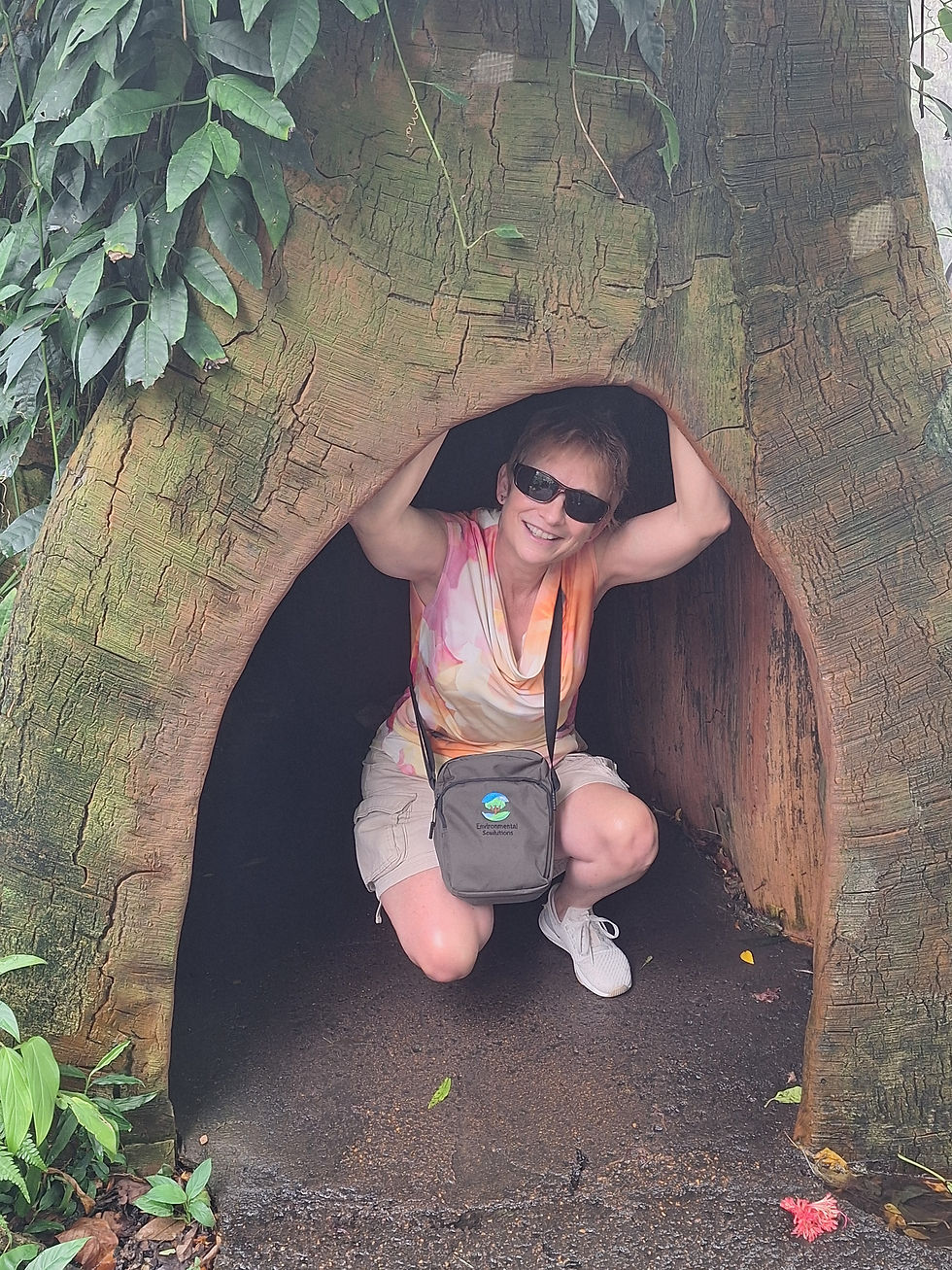
Since losing my chosen family, I've come to discover the beauty and poignancy of unknowing in respect to my identity. Hanging in the balance, suspended, and allowing myself to float and be comfortable in the questions has become my daily practice and spiritual discipline. I am ____________? Even a photo can't fill in the blank with any depth or authenticity:


Despite this ambiguity in respect to core identity, there are a few things I've learned along the way about health and wholeness in the context of the wider "We." I call it "Natural Fine-Tuning." And like a world-view that keeps morphing to reflect the dynamism of the universe, or a daily spiritual practice that serves to make us stronger, when I practice these, I simply feel better, more alive, and more at home among the wider "We" of creation.
So, here's a 60th Birthday gift to the world - myself, my best self that's in the process of becoming! And some things I like to practice along the way:
Nature immersion - Shinrin Yoku - full-sensory immersion to feel the heartbeat of creation
Breathing/quieting/centering - Focusing on breath, and practicing calming techniques through moderating breath, stillness, and mindfulness
Tai chi/qi gong movement - Gentle, slow-moving, embodied practice for learning the art of presencing, savoring, balance, focus, strength, and joy
Yoga - Strengthening core, and practicing deep, restorative rest
Dream journaling - Integrating wisdom from dream states that allow the deep unconscious to come to light
Gratitude push-ups - Generating energy for cultivating gratitude and building upper body strength
Poetry - Nature poetry, Haiku, and composing the poetry of the Present Moment
Afternoon Tea - a hot cuppa in Nature for a daily Examen of Consciousness in the garden
Birding - Who's singing now?
Gardening - Who's growing now?
Nature Adventuring - Discovering paths not yet explored - to push out of comfortable familiarity into new horizons
Nature Photography - Loving the Beauty, and being beautiful; seeing Nature from many perspectives
Biomimetic Home & Garden Design - Soulscapes - Imitating Nature to inspire, nourish, and refresh the Nest - learning to love and cherish Home
Hydrophony - Calibrating breath and energy to the sound of living water
Mycelial networking - Imitating the mycelial (fungal) network beneath the surface of Earth that connects arboreal life for communication, mutual support and protection - Lesson: REACH OUT and CONNECT every day
Friends, Friends, Friends - Spending time with the ones we love for improved health, full-body laughter, shared tears, and mutual support
Creature-Kin - Being open to, protecting, and enJOYing ALL our relations, learning their languages, and fostering deep care for all living being in the biosphere
Lifelong Learning - Reading, listening for clarity and nuance, practicing radical hospitality and inclusion, and integrating Yin and Yang for balance and compassion
A final blessing: As a University professor in Jesuit higher ed, I walked with many young adults wondering about their core identity, asking existential questions, and discerning how to direct their learning, energy, and love. Here is a prayer from the Christian tradition that I used to offer to my students who often found themselves in the crucible of vocational discernment. I invited them to substitute the terms "Love," "Energy," or whatever God-language resonated with them. It's called "Patient Trust," by a Jesuit who was a renowned paleontologist, spiritual writer, and visionary pioneer of evolutionary consciousness. It might be inspiring for those who love creation and feel at home in Nature's embrace. It is for me.
"Patient Trust" by Pierre Teilhard de Chardin, SJ
Above all, trust in the slow work of God.
We are quite naturally impatient in everything
to reach the end without delay.
We should like to skip the intermediate stages.
We are impatient of being on the way to something unknown, something new.
And yet it is the law of all progress
that it is made by passing through some stages of instability—
and that it may take a very long time.
And so I think it is with you;
your ideas mature gradually—let them grow,
let them shape themselves, without undue haste.
Don’t try to force them on, as though you could be today what time
(that is to say, grace and circumstances acting on your own good will)
will make of you tomorrow.
Only God could say what this new spirit gradually forming within you will be.
Give our Lord the benefit of believing that his hand is leading you,
and accept the anxiety of feeling yourself in suspense and incomplete.


Comments